Introduction
In today’s competitive online world, businesses invest heavily in digital marketing to increase brand awareness, generate leads, and boost sales. However, one of the biggest questions business owners ask is: “Is digital marketing really giving results?”
The answer lies in measuring ROI (Return on Investment). Understanding ROI helps businesses know whether their marketing strategies are successful or if improvements are needed. Without tracking ROI, companies may continue spending money on campaigns that do not generate real value.
This blog explains how businesses can measure ROI in digital marketing, why it matters, and which metrics help determine marketing success.
What is ROI in Digital Marketing?
ROI in digital marketing refers to the profit or value a business earns from its marketing efforts compared to the amount spent on campaigns.
In simple words, ROI helps answer questions like:
- Are marketing campaigns generating revenue?
- Is the business gaining quality leads?
- Which marketing channel performs best?
- Is the investment worth the cost?
The basic ROI formula is:
[
ROI = frac{(Revenue - Marketing Cost)}{Marketing Cost} imes 100
]
For example:
- A company spends ₹50,000 on digital marketing.
- The campaign generates ₹2,00,000 in sales.
ROI Calculation:
[
ROI = frac{(2,00,000 - 50,000)}{50,000} imes 100 = 300%
]
This means the business earned three times more than what it invested.
Why Measuring ROI is Important in Digital Marketing
Many businesses focus only on website traffic or social media likes. While these metrics are useful, they do not always show actual business growth. ROI measurement provides a clearer picture of marketing performance.
Benefits of Measuring ROI
1. Helps Improve Marketing Strategies
Tracking ROI allows businesses to identify which campaigns are working and which are not. This helps marketers optimize strategies for better performance.
2. Reduces Unnecessary Spending
Businesses can stop investing in low-performing campaigns and focus on profitable channels.
3. Improves Decision-Making
ROI data helps companies make smarter marketing decisions based on real results rather than assumptions.
4. Increases Business Growth
When businesses understand what generates revenue, they can scale successful campaigns and grow faster.
5. Builds Customer Understanding
ROI tracking helps businesses learn customer behavior, preferences, and buying patterns.
Key Metrics to Measure Digital Marketing ROI
Different digital marketing channels require different performance indicators. Businesses should track multiple metrics to understand the full impact of campaigns.
1. Website Traffic
Website traffic shows how many users visit a website through search engines, social media, paid ads, or email campaigns.
Important traffic metrics include:
- Number of visitors
- Traffic sources
- Page views
- Bounce rate
- Session duration
Higher traffic often indicates better brand visibility and audience interest.
2. Lead Generation
Leads are potential customers who show interest in products or services.
Businesses can track:
- Form submissions
- Newsletter signups
- Demo requests
- Contact inquiries
- Phone calls
Lead generation metrics help determine whether campaigns attract potential buyers.
3. Conversion Rate
Conversion rate measures how many users complete a desired action, such as purchasing a product or signing up for a service.
Formula:
[
Conversion Rate = frac{Conversions}{Total Visitors} imes 100
]
A high conversion rate indicates effective marketing and website performance.
4. Customer Acquisition Cost (CAC)
CAC measures how much it costs to acquire a new customer.
Formula:
[
CAC = frac{Total Marketing Cost}{Number of New Customers}
]
Lower acquisition costs usually indicate efficient marketing campaigns.
5. Customer Lifetime Value (CLV)
CLV measures the total revenue a customer generates during their relationship with a business.
When CLV is higher than acquisition cost, marketing efforts are profitable.
6. Social Media Engagement
Social media ROI can be measured through:
- Likes
- Shares
- Comments
- Followers
- Click-through rates
- Direct messages
Strong engagement often reflects audience trust and brand awareness.
7. Email Marketing Performance
Businesses can track:
- Open rates
- Click-through rates
- Unsubscribe rates
- Conversion rates
Email marketing remains one of the highest ROI digital marketing channels.
8. SEO Performance
SEO ROI can be measured using:
- Organic website traffic
- Keyword rankings
- Backlinks
- Domain authority
- Organic conversions
SEO delivers long-term results and helps businesses reduce advertising costs.
Best Tools to Measure Digital Marketing ROI
Using the right tools makes ROI tracking easier and more accurate.
Google Analytics
Google Analytics helps businesses monitor:
- Website traffic
- User behavior
- Conversions
- Traffic sources
- Campaign performance
It is one of the most important tools for measuring digital marketing success.
Google Search Console
This tool helps track SEO performance, including:
- Search rankings
- Click-through rates
- Keyword visibility
- Website indexing
Social Media Insights
Platforms like Facebook, Instagram, and LinkedIn provide built-in analytics to track engagement and campaign performance.
CRM Software
Customer Relationship Management tools help businesses track leads, customer interactions, and sales conversions.
Popular CRM tools include:
- HubSpot
- Zoho CRM
- Salesforce
Email Marketing Platforms
Platforms like Mailchimp and ConvertKit provide data on email campaign performance and subscriber behavior.
Challenges Businesses Face While Measuring ROI
Although ROI tracking is essential, businesses often face challenges.
1. Multi-Channel Attribution
Customers interact with businesses through multiple channels before making purchases. Determining which channel deserves credit can be difficult.
2. Long Sales Cycles
Some businesses take weeks or months to convert leads into customers, making ROI measurement more complex.
3. Tracking Offline Conversions
Customers may discover businesses online but complete purchases offline, which can affect tracking accuracy.
4. Inconsistent Data
Incorrect tracking setup or missing analytics can lead to inaccurate ROI calculations.
Tips to Improve Digital Marketing ROI
Businesses can maximize ROI by following smart marketing practices.
Focus on High-Quality Content
Creating valuable and informative content improves SEO, engagement, and customer trust.
Optimize Website Performance
Fast-loading, mobile-friendly websites improve user experience and conversion rates.
Use Data-Driven Decisions
Analyze campaign data regularly and adjust strategies based on performance metrics.
Invest in SEO
SEO provides long-term traffic and reduces dependency on paid advertising.
Target the Right Audience
Understanding audience behavior helps businesses create personalized marketing campaigns.
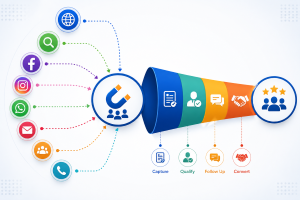
Improve Conversion Funnels
Simplifying checkout processes and improving landing pages can increase conversions.
The Role of SEO in ROI Measurement
SEO plays a major role in improving digital marketing ROI because it generates organic traffic without continuous advertising expenses.
Benefits of SEO for ROI include:
- Higher search engine rankings
- Increased website visibility
- Better lead generation
- Long-term online growth
- Improved brand credibility
Businesses that invest in SEO often experience sustainable growth and better marketing returns over time.
Future of ROI Measurement in Digital Marketing
Technology and AI are transforming how businesses measure marketing success.
Future trends include:
- AI-powered analytics
- Predictive customer behavior analysis
- Advanced automation tools
- Real-time campaign tracking
- Improved personalization
Businesses that adopt modern analytics tools can make faster and more accurate marketing decisions.
Conclusion
Measuring ROI in digital marketing is essential for understanding campaign effectiveness and business growth. Without proper tracking, businesses may waste money on strategies that do not deliver results.
By monitoring important metrics such as website traffic, conversions, lead generation, SEO performance, and customer acquisition costs, businesses can make smarter marketing decisions and maximize profits.
In Cubetechworld, Digital marketing success is not just about gaining followers or website visitors. The real goal is generating meaningful business outcomes, improving customer relationships, and achieving long-term growth.
Companies that consistently analyze ROI and optimize their strategies will stay ahead in today’s competitive digital landscape.