Introduction
In today's competitive digital landscape, simply having a website is no longer enough. Whether you own a small business, run an e-commerce store, or manage a corporate website, your online success depends on how easily customers can find your website and how smoothly it performs. While many businesses focus on creating quality content and attractive designs, they often overlook one of the most important aspects of digital marketing—technical SEO.
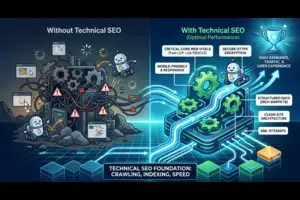
Technical SEO forms the foundation of a successful website. It ensures that search engines can crawl, understand, and index your website efficiently while providing visitors with a fast, secure, and user-friendly experience. Even the most informative content may struggle to rank on search engines if technical issues prevent search engine bots from accessing your pages.
As search engines continue to evolve, website performance has become a significant ranking factor. Google prioritizes websites that load quickly, provide secure browsing, work seamlessly on mobile devices, and deliver a positive user experience. This is where technical SEO plays a vital role.
In this comprehensive guide, we'll explore why technical SEO is essential for website performance, how it impacts search rankings, and the best practices every business should follow to maintain a technically optimized website.
What Is Technical SEO?
Technical SEO refers to the process of optimizing a website's infrastructure so that search engines can crawl, index, and rank its pages efficiently. Unlike content SEO, which focuses on keywords and content quality, technical SEO deals with the backend elements that influence website performance.
Some of the core areas of technical SEO include:
-
Website speed optimization
-
Mobile responsiveness
-
Secure HTTPS implementation
-
XML sitemap creation
-
Robots.txt optimization
-
Structured data markup
-
URL structure
-
Crawlability
-
Indexability
-
Canonical tags
-
Internal linking
-
Core Web Vitals
These technical improvements help search engines understand your website while also improving the browsing experience for users.
Why Website Performance Matters
Website performance affects nearly every aspect of your online business. Visitors expect websites to load within a few seconds. If your pages load slowly or contain technical errors, users are likely to leave before exploring your products or services.
Poor website performance can lead to:
-
Higher bounce rates
-
Lower search rankings
-
Reduced customer trust
-
Lower conversion rates
-
Poor user engagement
-
Lost revenue
Technical SEO ensures your website performs efficiently, making it easier for users and search engines alike.
How Technical SEO Improves Search Engine Crawling
Search engines rely on automated bots called crawlers to discover web pages. If these crawlers encounter broken links, server errors, duplicate content, or blocked resources, they may struggle to understand your website.
Technical SEO improves crawling by:
-
Removing broken links
-
Fixing crawl errors
-
Optimizing robots.txt
-
Maintaining XML sitemaps
-
Improving website architecture
When search engines crawl your website efficiently, new content gets indexed faster and has a better opportunity to appear in search results.
Better Indexing Means Better Visibility
Crawling and indexing are different processes.
-
Crawling means discovering pages.
-
Indexing means storing those pages in the search engine database.
Technical SEO helps ensure only valuable pages get indexed while duplicate or unnecessary pages remain excluded.
Proper indexing allows search engines to display the correct pages for relevant search queries.
Website Speed Is a Critical Ranking Factor
One of the biggest benefits of technical SEO is improving website speed.
Fast-loading websites provide better user experiences and receive favorable treatment from search engines.
Website speed optimization includes:
-
Compressing images
-
Using browser caching
-
Reducing CSS and JavaScript files
-
Optimizing server response times
-
Enabling compression
-
Using Content Delivery Networks (CDNs)
A website that loads within two or three seconds is more likely to retain visitors than one that takes six or seven seconds.
Core Web Vitals and User Experience
Google introduced Core Web Vitals to measure real-world user experience.
These include:
Largest Contentful Paint (LCP)
Measures how quickly the main content appears.
Ideal score:
Under 2.5 seconds.
Interaction to Next Paint (INP)
Measures website responsiveness.
Faster interaction leads to better user satisfaction.
Cumulative Layout Shift (CLS)
Measures visual stability.
Unexpected page movement frustrates users and negatively impacts experience.
Technical SEO focuses heavily on improving these metrics.
Mobile Optimization Is No Longer Optional
Today, most internet users browse websites using smartphones.
Google primarily evaluates the mobile version of websites before ranking them.
Technical SEO ensures websites:
-
Display properly on all screen sizes
-
Load quickly on mobile devices
-
Maintain readable fonts
-
Use responsive layouts
-
Provide touch-friendly navigation
A mobile-friendly website improves both rankings and customer satisfaction.
HTTPS Builds Trust and Security
Website security is another important technical SEO factor.
HTTPS encrypts communication between users and websites.
Benefits include:
-
Secure customer information
-
Improved search rankings
-
Increased visitor trust
-
Better online reputation
Visitors are more likely to engage with websites displaying secure connections.
XML Sitemaps Help Search Engines Discover Pages
An XML sitemap acts like a roadmap for search engines.
It lists important pages that should be crawled and indexed.
Benefits include:
-
Faster indexing
-
Better page discovery
-
Improved crawl efficiency
-
Easier content updates
Large websites especially benefit from well-maintained sitemaps.
Robots.txt Controls Crawling
The robots.txt file tells search engines which pages should or should not be crawled.
Proper configuration prevents search engines from wasting crawl budget on unnecessary pages such as:
-
Admin panels
-
Login pages
-
Duplicate content
-
Temporary pages
Correct use of robots.txt improves overall SEO efficiency.
Structured Data Enhances Search Results
Structured data helps search engines better understand website content.
It enables rich search results like:
-
Star ratings
-
FAQs
-
Product prices
-
Business information
-
Event listings
Rich snippets improve visibility and increase click-through rates.
URL Structure Improves Navigation
Well-structured URLs benefit both users and search engines.
Example:
Good URL:
example.com/technical-seo-guide
Poor URL:
example.com/page?id=92847
Clean URLs improve readability and keyword relevance.
Internal Linking Strengthens SEO
Internal links connect related pages across your website.
Benefits include:
-
Better crawling
-
Improved user navigation
-
Increased page authority
-
Lower bounce rates
Technical SEO ensures internal linking remains logical and organized.
Duplicate Content Can Harm Rankings
Duplicate pages confuse search engines.
Technical SEO solves duplicate content using:
-
Canonical tags
-
Redirects
-
Proper URL management
This helps search engines identify the preferred version of each page.
Broken Links Affect Website Performance
Broken links create poor user experiences and reduce search engine trust.
Technical SEO regularly identifies:
-
404 errors
-
Redirect chains
-
Missing pages
Fixing these problems improves overall website health.
Crawl Budget Optimization
Search engines allocate a crawl budget for every website.
If bots waste time crawling unnecessary pages, important pages may remain undiscovered.
Technical SEO improves crawl budget by:
-
Removing duplicate pages
-
Blocking unnecessary URLs
-
Improving internal linking
-
Maintaining clean site architecture
Website Architecture Matters
A well-organized website helps both users and search engines.
Good architecture includes:
-
Clear navigation
-
Logical categories
-
Organized URLs
-
Easy access to important pages
Visitors should reach any page within a few clicks.
Image Optimization Improves Speed
Large images slow websites considerably.
Technical SEO recommends:
-
Compressing images
-
Using modern formats like WebP
-
Adding descriptive alt text
-
Lazy loading images
Optimized images improve loading speed while supporting accessibility.
Technical SEO Supports Better User Experience
Ultimately, search engines reward websites that prioritize users.
Technical SEO improves:
-
Navigation
-
Loading speed
-
Security
-
Mobile usability
-
Accessibility
Happy users spend more time on your website, increasing the likelihood of conversions.
Common Technical SEO Mistakes
Many websites unknowingly suffer from technical issues such as:
-
Slow page speed
-
Missing meta tags
-
Duplicate content
-
Broken internal links
-
Incorrect redirects
-
Poor mobile responsiveness
-
Missing XML sitemaps
-
Blocked pages in robots.txt
-
Unoptimized images
-
Crawl errors
Regular audits help identify and resolve these issues before they impact rankings.
Best Practices for Technical SEO
To maintain a technically optimized website:
-
Improve page loading speed.
-
Use responsive web design.
-
Enable HTTPS across the site.
-
Submit an updated XML sitemap.
-
Optimize robots.txt carefully.
-
Fix crawl errors promptly.
-
Remove broken links.
-
Implement structured data where appropriate.
-
Optimize images and multimedia.
-
Create SEO-friendly URLs.
-
Improve internal linking.
-
Monitor Core Web Vitals regularly.
-
Avoid duplicate content.
-
Perform regular technical SEO audits.
Following these practices helps create a website that performs well for both users and search engines.
How Technical SEO Impacts Business Growth
Technical SEO is not just about improving rankings—it directly influences business outcomes. A technically optimized website can:
-
Attract more organic traffic.
-
Increase user engagement.
-
Improve conversion rates.
-
Build customer trust.
-
Reduce bounce rates.
-
Enhance online visibility.
-
Support long-term digital marketing success.
By investing in technical SEO, businesses create a strong foundation for sustainable online growth.
Conclusion
Technical SEO is the backbone of a successful website. While compelling content and creative marketing campaigns are essential, they cannot reach their full potential if the website itself suffers from slow loading speeds, poor mobile usability, indexing issues, or security problems.
In Cubetechworld, A technically optimized website allows search engines to crawl and understand your content efficiently while providing visitors with a seamless browsing experience. From improving website speed and Core Web Vitals to optimizing crawlability, structured data, and mobile responsiveness, every technical enhancement contributes to better search visibility and higher user satisfaction.
Businesses that prioritize technical SEO gain a competitive advantage by improving search rankings, increasing organic traffic, and delivering an exceptional experience that encourages visitors to stay longer and convert into customers.
Rather than treating technical SEO as a one-time task, make it an ongoing part of your digital marketing strategy. Regular technical audits, continuous performance monitoring, and timely fixes will ensure your website remains fast, secure, and optimized for both users and search engines. In an increasingly competitive online environment, strong technical SEO is one of the smartest long-term investments you can make for your website's performance and business success.
.webp)

.webp)